MBA CASE STUDY

The Airbnb Growth Dilemma:
Compliance vs. Scale

When unconventional growth tactics meet uncertain regulation, should startups seek legitimacy early—or move fast enough to make the rules irrelevant?

Industry: Technology / Hospitality
Period: 2008-2011
Stage: Early-Stage Startup
Reading Time: 18 minutes
PART 1

The Situation

A home-sharing startup faces skepticism, funding struggles, and regulatory uncertainty

Founders brainstorming in modest apartment setting

The Concept

Three founders have built a platform allowing people to rent out air mattresses and spare rooms in their homes to strangers. The idea emerged from desperation—they needed to make rent during a San Francisco design conference when hotels were sold out.

The concept: transform empty living spaces into temporary accommodations. But unlike hotels, there's no licensing, no safety inspections, and no regulatory framework. Just strangers trusting strangers.

The Market Reception

Investors are unanimous in their skepticism. The feedback is brutal:

  • "No one will do this" – The idea of sleeping in a stranger's home seems absurd
  • "It's too dangerous" – Safety and trust concerns dominate every pitch
  • "The market is too small" – Who really needs this service?
  • "Regulatory nightmare" – Hotels are regulated for a reason

The Funding Crisis

After seven rejections from prominent Silicon Valley investors, the founders are nearly broke. Traditional paths to venture funding have closed. They need to get creative—or quit.

Source: Case study analysis based on reported funding timeline

The Cereal Box Gambit

In a moment of desperation-fueled creativity, the founders design and sell special-edition breakfast cereals during the 2008 U.S. presidential election: "Obama O's" and "Cap'n McCain's." They hand-make 1,000 boxes, sell them for $40 each, and generate $30,000—enough to keep the company alive for a few more months.

This becomes their calling card: resourcefulness over convention. But it also establishes a pattern—when the traditional path is blocked, find a creative workaround.
PART 2

The Unconventional Growth Playbook

Creative tactics that drive early traction—but raise questions about sustainability

Technical illustration of growth hacking strategies

The Craigslist Integration

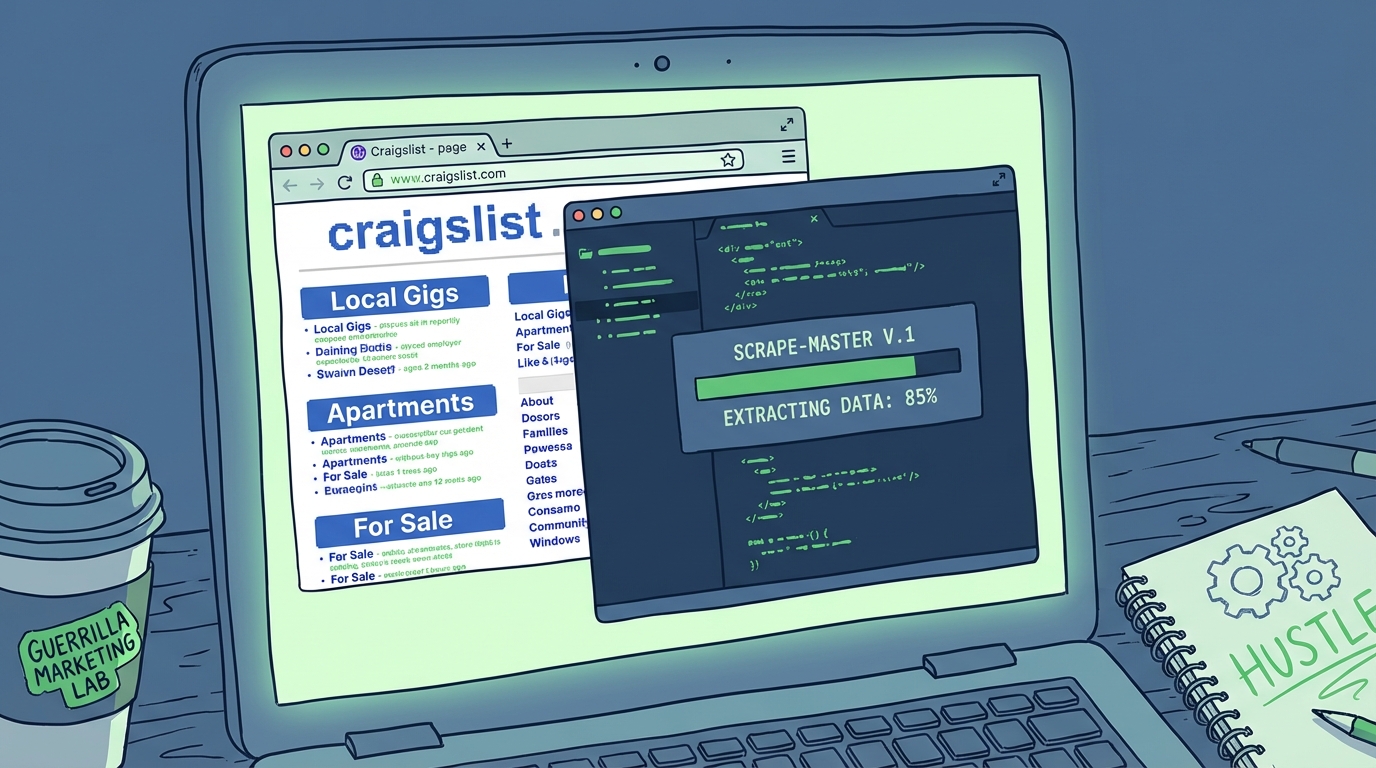
The founders identify Craigslist as the dominant platform for short-term rentals and sublets. Millions of people already use it. Rather than compete directly, they build an integration that allows hosts to cross-post their Airbnb listings to Craigslist automatically.

The technical execution is sophisticated—arguably scraping Craigslist's platform in ways not explicitly permitted. But it works. Traffic surges. Hosts flock to the platform for the dual-listing capability. Growth accelerates from dozens of bookings per month to hundreds.

Impact Metrics

  • 10x increase in host signups within 3 months
  • Access to Craigslist's massive existing user base
  • Automated cross-posting saves hosts time
  • Legitimizes platform through association
  • Drives network effects as more hosts join

The Gray Area

  • Craigslist terms of service ambiguity
  • Potential legal exposure from scraping
  • Dependency on external platform's tolerance
  • Could be shut down at any moment
  • Sets precedent for rule-bending behavior

Source: Estimated growth trajectory based on case analysis

The Professional Photography Program

Analysis of successful listings reveals a pattern: professional photos dramatically outperform amateur smartphone pictures. The team notices that listings with high-quality images book at 2-3x the rate of those with poor photography.

The solution: hire photographers in major cities to shoot host properties for free. This doesn't scale cleanly—it's expensive and operationally complex—but it works. Quality improves, bookings increase, and hosts appreciate the white-glove service. The investment pays for itself through higher booking rates and platform fees.

PART 3

The Strategic Decision Point

You are the founding team in late 2009. What path do you choose?

The Core Dilemma

Your growth tactics are working, but they exist in legal and regulatory gray areas. Cities are beginning to notice the platform. Hotel associations are starting to lobby against unregulated short-term rentals. Some early-adopter cities are considering ordinances that could restrict or ban your service entirely.

Meanwhile, your user base is growing 30% month-over-month. Hosts love the platform. Guests are having positive experiences. Y Combinator has accepted you into their program, providing validation and a small investment. You're gaining momentum.

Should you optimize for regulatory compliance and brand legitimacy early—or grow fast enough that regulation becomes inevitable rather than optional?

What would you do? Select your approach:

PART 4

Strategic Options Analysis

Four distinct approaches to navigating the growth-legitimacy tradeoff

OPTION 1 Regulatory-First Approach: Build Legitimacy Before Scale

Proactively engage with city governments, hotel regulators, and neighborhood associations. Establish safety protocols, insurance requirements, and licensing frameworks. Grow only in cities where regulatory clarity exists.

Advantages
  • Reduced legal risk and potential shutdown scenarios
  • Builds trust with stakeholders and public institutions
  • Creates defensible competitive moat through compliance
  • Easier to attract institutional investors
  • Sustainable long-term business model
Disadvantages
  • Dramatically slower growth trajectory
  • Competitor could ignore regulations and outgrow you
  • High upfront costs for compliance infrastructure
  • May never reach critical mass in key markets
  • Regulatory negotiations can take years

OPTION 2 Growth-First Approach: Scale Rapidly, Address Regulation Later

Maximize user acquisition and market penetration. Build a community so large and loyal that shutting down the platform becomes politically and economically infeasible. Hire legal/policy teams only after achieving scale.

Advantages
  • Rapid market share capture before competitors emerge
  • Network effects create winner-take-all dynamics
  • User base becomes political constituency
  • Negotiate from position of strength once established
  • Demonstrates real demand before regulatory debate
Disadvantages
  • High risk of sudden regulatory crackdown
  • Potential for catastrophic safety incidents
  • Brand damage from "move fast and break things" reputation
  • Expensive retroactive compliance costs
  • Could face legal penalties or market bans

OPTION 3 Hybrid Approach: Selective Compliance with Parallel Growth

Pursue aggressive growth in permissive markets while simultaneously working on pilot programs with select cities. Build compliance infrastructure in parallel with scaling. Use early regulatory wins to legitimize expansion elsewhere.

Advantages
  • Balances growth velocity with risk management
  • Creates case studies for regulatory engagement
  • Demonstrates good faith to stakeholders
  • Allows rapid iteration on compliance models
  • Maintains momentum while building legitimacy
Disadvantages
  • Resource-intensive on both fronts simultaneously
  • Risk of inconsistent policies across markets
  • May anger regulators who see selective compliance
  • Harder to maintain clear strategic narrative
  • Could end up with worst of both approaches

OPTION 4 Pivot to Regulated Model: Position as Hotel Alternative

Redesign the business model to fit within existing regulatory frameworks. Focus on professionally managed properties, longer-term stays (30+ days), or commercial real estate. Abandon the peer-to-peer home-sharing vision for a more conventional approach.

Advantages
  • Operates within established legal boundaries
  • Lower regulatory risk and legal exposure
  • Easier to raise institutional capital
  • Can partner with established hospitality players
  • Clearer path to profitability
Disadvantages
  • Abandons core differentiation and vision
  • Competes directly with funded hotel chains
  • Loses unique value proposition for users
  • Limited supply relative to P2P model
  • May no longer be venture-scale opportunity

Source: Strategic analysis framework

PART 5

What Actually Happened

Airbnb's actual strategic decisions and their consequences

The Path Chosen: Growth-First with Strategic Legitimacy Building

Airbnb chose Option 2 with elements of Option 3. The founders decided to prioritize rapid growth and market penetration, explicitly choosing to operate in regulatory gray areas while building legitimacy through user stories and economic impact data.

Key Strategic Decisions:

  • Continued growth hacking: The Craigslist integration continued until Craigslist eventually blocked it in 2012—but by then, Airbnb had established independent traction.
  • User-first narrative: Instead of engaging regulators directly, the company mobilized hosts and guests to tell their stories, creating grassroots political support.
  • Market dominance strategy: They raised $7.2 million in Series A funding (2010) and $112 million in Series B (2011), using capital to accelerate growth before regulatory frameworks solidified.
  • Selective engagement: Only after reaching critical scale did they build a policy team (2011-2012) to negotiate with cities from a position of strength.

The Outcomes: 2010-2015

Source: Airbnb public statements and market analysis

Successes

  • Market dominance: Became the clear leader in home-sharing globally
  • Network effects: Reached critical mass where hosts and guests created self-sustaining ecosystem
  • Political capital: Mobilized millions of hosts as advocates in regulatory debates
  • Valuation surge: Grew from near-bankruptcy to $31 billion valuation by 2017
  • Category creation: Made home-sharing a mainstream, socially acceptable practice

Challenges & Costs

  • Regulatory battles: Years of expensive legal and lobbying fights in major cities
  • Brand damage: Perceived as prioritizing growth over community impact
  • Safety incidents: High-profile cases of property damage and safety issues
  • Market bans: Restricted or banned in some jurisdictions (Berlin, Barcelona, etc.)
  • Retroactive compliance: Costly systems to collect taxes, verify identities, enforce rules

Founder Perspective

"If we had waited for regulatory clarity, we'd still be waiting. The only way to prove this could work was to show it working. Once millions of people had positive experiences, the conversation changed from 'Should this exist?' to 'How do we regulate it?'"

— Reflecting the strategic philosophy that guided early decisions

Strategic Insights & Business Lessons

1. First-Mover Advantage in Uncertainty

When regulatory frameworks are unclear, moving fast can create facts on the ground that shape the eventual rules. The cost is risk; the benefit is potentially defining the market structure.

2. Users as Political Capital

A large, passionate user base becomes a constituency that regulators must consider. Growth translates into political leverage that can protect the business model.

3. The Legitimacy Timing Question

Seeking legitimacy too early can be fatal if it slows growth below critical mass. Seeking it too late can result in bans or restrictions. The optimal timing depends on market dynamics and regulatory velocity.

4. Gray Area Operations

Operating in legal gray areas is a calculated risk. Success requires: (a) avoiding clear legal violations, (b) building public support, (c) having capital to fight regulatory battles, (d) willingness to accept restrictions post-growth.

5. Winner-Takes-Most Dynamics

In network effect businesses, the gap between first and second place can be enormous. This creates strong incentives for aggressive growth strategies, even with significant risk.

6. Cost of Retroactive Compliance

Building compliance systems after achieving scale is expensive and operationally disruptive. Companies must budget for these costs in the growth-first approach—they're not optional, just delayed.

7. Narrative Power

The story you tell about your business matters enormously. "Helping people make ends meet" resonates differently than "disrupting hotel regulations." Strategic framing is competitive advantage.

8. The Irreversibility Threshold

There's a scale beyond which shutting down a service becomes politically and economically infeasible. Reaching that threshold before facing serious regulatory opposition was central to Airbnb's strategy.

Discussion Questions for Analysis

  1. Was Airbnb's approach ethical? Consider obligations to hosts, guests, communities, and regulators. Where do you draw the line between entrepreneurial hustle and reckless disregard?
  2. Could they have achieved similar success with a compliance-first approach? What would be different? Would a competitor have filled the vacuum?
  3. Who bears the costs of the growth-first strategy? Analyze the distribution of benefits and harms across stakeholders: founders/investors, hosts, guests, neighbors, hotel workers, cities.
  4. Is this approach replicable in other industries? What market characteristics made it work for Airbnb? Where would this strategy fail catastrophically?
  5. What role did timing play? Would this strategy work today, in a post-Uber, post-Airbnb regulatory environment where governments are more skeptical of platform companies?
  6. How should investors evaluate regulatory risk? Should VCs have pressed for more compliance early? What's the fiduciary responsibility when investing in legally ambiguous business models?
  7. Alternative histories: If New York or San Francisco had moved quickly to ban home-sharing in 2010, could Airbnb have survived? What would the company look like today?
  8. Lessons for incumbents: How should established industries respond to startups that ignore regulations the incumbents must follow? Is there a better response than lobbying for enforcement?